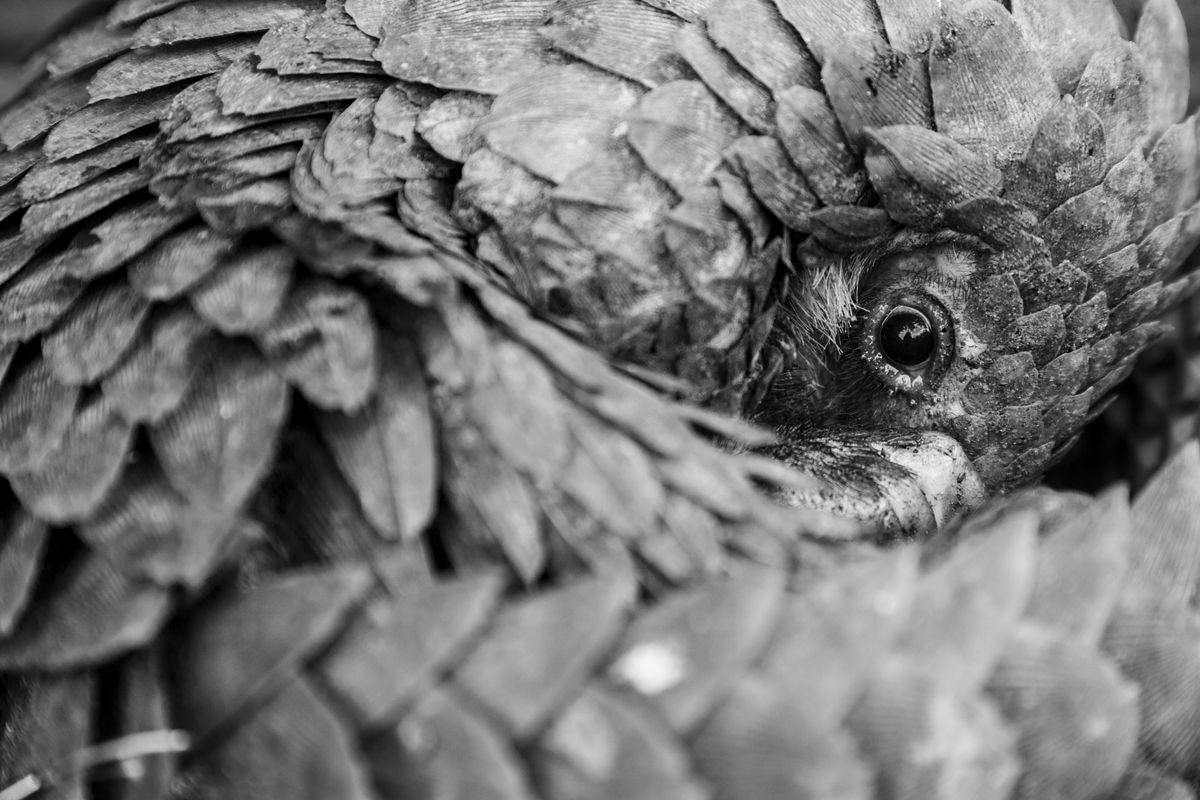


Today’s mammals face all sorts of problems that their distant ancestors didn’t have to worry about. Alongside the dual threat of habitat loss and climate change, is a third factor at play: the illegal wildlife trade. This involves the removal of animals from their native homes and exploiting them for monetary gain, either as pets or for a valuable part of them. In the case of the world's most trafficked mammal, the pangolin, the reality is pretty extreme.
The World’s Most Trafficked Mammal
There are eight species of pangolin in total, four of which live in Asia and four in Africa. These animals are trafficked for their claws and scales for use in traditional medicines, as well as for meat. All eight species are protected by international laws and trade bans to combat this; however, poachers and trading groups are pretty good at shipping these animals under the radar.
The David Shepard Wildlife Foundation estimates that a pangolin is taken from the wild every four minutes. One study explains that between August 2000 and July 2019, approximately 895,000 pangolins were trafficked, though the authors also write that this is likely an underestimation.
What Actually Is A Pangolin?
Pangolins are small, scale-covered mammals - they are the only known scaly mammals – that mostly eat termites or ants with their long sticky tongues. Due to this combination of scales and diet, they are sometimes known as “scaly anteaters”.
Typically, pangolins live solitary lives and are quite shy, secretive creatures. When threatened, they roll up into a ball to protect themselves.

Sharp claws and a sticky tongue help pangolins hoover up ants and termites.
Image credit: Vladimir Turkenich/Shutterstock.com
Laws and Protection
Three of the eight species of pangolin – the Chinese, Sunda, and Philippine pangolins – are listed as critically endangered by the IUCN Red List, which has largely been attributed to persistent hunting. According to National Museums Liverpool, the exploitation of pangolins by humans has been happening since at least 480 CE, the point at which traditional medicine prescriptions for pangolin scales can be traced back.
The highest levels of demand for pangolin parts come from China and Vietnam. However in June 2020, China increased protective legislation around the Chinese pangolin (Manis pentadactyla), stopping the consumption of the species in the country and preventing the use of pangolin scales in traditional medicine, explains the WWF.
In 2023, the UK Government also awarded a total of £40 million (about $51 million) of funding to 80 different conservation projects, including supporting the work of the Wildlife Conservation Society, to reduce demand for pangolin scales.